


- Mezzanine Floors
- Self-Storage Units
- Racking & Shelving
- Custom Fabrications
Warehouse Racking Installation: A Complete Guide for UK Warehouse Managers
read
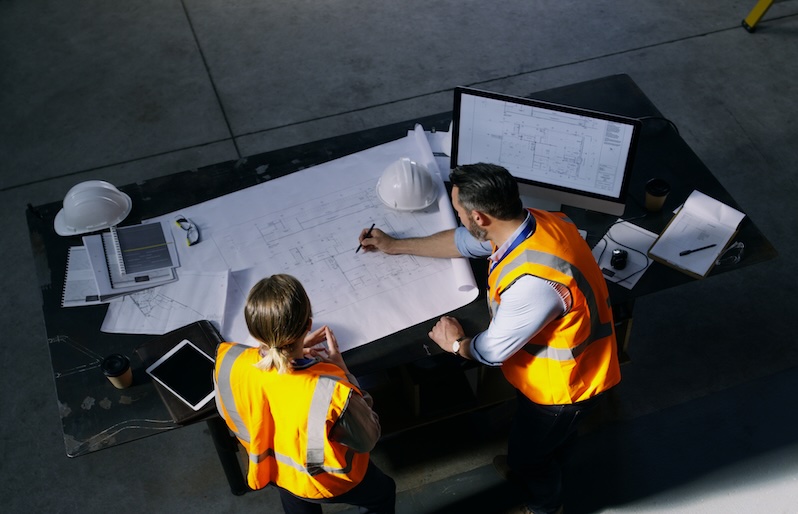
When you commission a warehouse racking installation, you are not simply buying a product - you are investing in the infrastructure your entire operation depends on. Get it right, and you will gain a safe, efficient storage system capable of performing under daily pressure for many years. Get it wrong, and the consequences range from costly remedial work to serious workplace accidents.
This guide covers everything UK warehouse managers need to know before commissioning a professional installation: the process itself, what separates a quality installation from one that falls short of regulatory standards, the questions to ask any prospective provider, and the factors that influence cost. If you are in the market for a racking installation - whether for a brand new warehouse or an existing space - this is your starting point.
Why Professional Warehouse Racking Installation Matters
Racking systems look deceptively straightforward. Frames, beams, floor bolts - how complicated can it be? In practice, the answer is: very. Pallet racking, in particular, is subject to significant loads and must be installed with precision to operate safely and within specification.
Even something as seemingly minor as altering the pitch of a support beam by a small margin can reduce the structural integrity of the entire system. Uprights that are not perfectly vertical, beams that are not correctly seated in their connectors, or safety pins that are omitted - these are not trivial oversights. In a busy warehouse environment where forklift trucks move at high speed, the margin for error is slim.
Beyond structural concerns, there is a legal dimension. Under the Provision and Use of Work Equipment Regulations 1998 (PUWER), warehouse racking is classified as work equipment. Employers have a legal duty to ensure it is correctly installed, maintained in a safe condition, and regularly inspected. Poorly installed racking that causes an injury exposes the business to serious legal and financial consequences.
A professional installation from an experienced specialist removes this risk at the outset. By adhering to the Health and Safety Executive (HSE) guidelines, PUWER providers ensure that racking systems meet essential legal safety requirements. Choosing a specialist committed to these UK safety standards provides the assurance that the system has been installed correctly from day one.
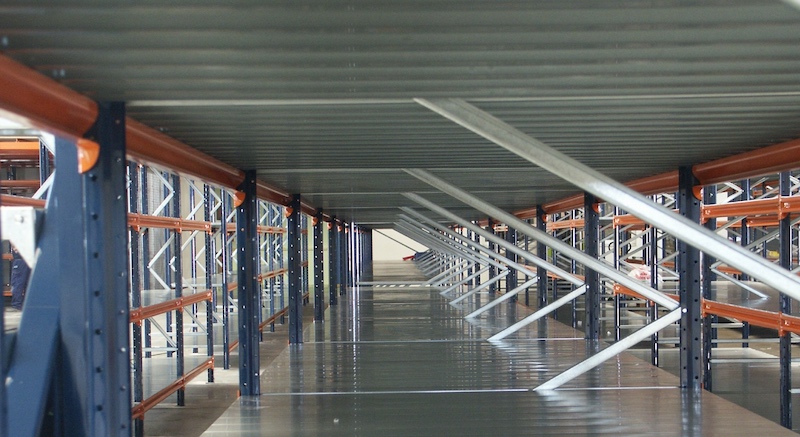
What the Warehouse Racking Installation Process Involves
Understanding the full scope of a professional installation helps you evaluate providers and set realistic expectations. A well-managed racking installation is not a same-day job that starts and ends with a team turning up with components. It is a structured process that begins well before anyone sets foot on your warehouse floor.
1. Requirements Gathering and Site Survey
The process starts with a detailed conversation about your operation - the type and volume of inventory you hold, your warehouse dimensions and layout, the stock management method you use, what forklift equipment is in use, and any known inefficiencies you want to address. A thorough provider will also ask about your growth plans, since a racking system that serves you well today should ideally accommodate your future needs too.
Following the initial consultation, a site survey is conducted. This is an important step, especially for larger projects. Floor condition, column positions, fire exit locations, overhead obstructions, and lighting all influence what is achievable and how the installation should be planned.
2. Design and Planning
Once the requirements and site constraints are understood, the design work begins. Experienced racking specialists use CAD software to develop a layout that maximises your storage density while maintaining safe aisle widths, efficient pick faces, and the correct zoning for different product types and movement frequencies.
Good racking design is about balancing trade-offs. Narrower aisles mean more bays but may limit forklift access. Higher racking maximises vertical space but requires appropriate equipment and increases the importance of load calculations. The best providers work through these decisions with you rather than imposing a one-size-fits-all solution.
The output of this stage should include detailed schematics, an itemised parts list, and - for larger projects - structural calculations confirming that the system will perform safely under the intended loads.
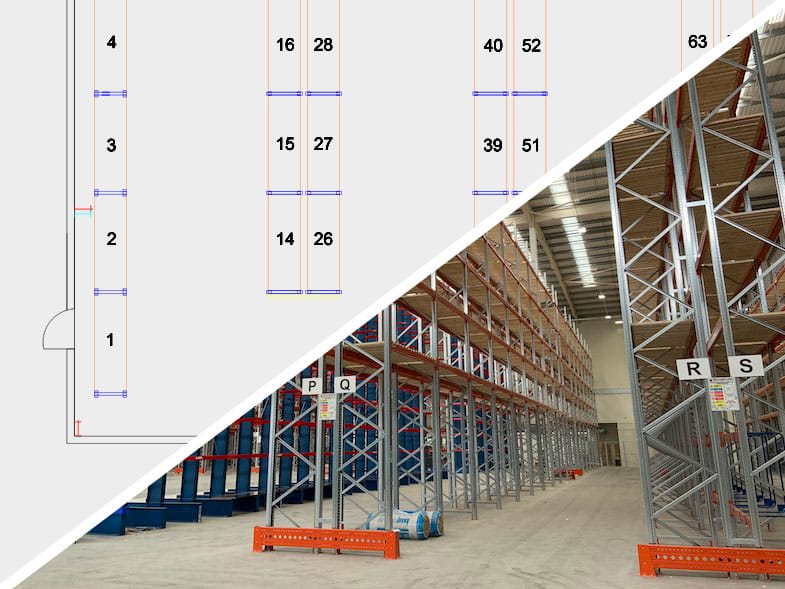
3. Pre-Installation Review and Sign-Off
Before installation begins, the design should be presented to you in full. A reputable installer will explain the rationale for their recommendations, walk you through any decisions that involve trade-offs, and give you the opportunity to ask questions or request amendments. Do not allow installation to proceed until you are satisfied with the design.
A pre-installation risk assessment is also carried out at this stage. This covers safe working practices during the installation itself - particularly important if your warehouse will remain in partial operation during the works.
4. The Installation
The installation itself involves considerably more than assembling metal frames. A professional installation team will work methodically through all plans and drawings, carefully assembling uprights, bracing, beams, and frames. Base plates must be correctly positioned, floor fixings drilled, and safety locks fitted to every beam connector.
Where required, back connectors, column protectors, guide rails, and anti-collapse meshing are added - not as afterthoughts, but as planned elements of a complete system. Load notices must be fitted to every run of racking, displaying the maximum permitted loads clearly and in a legible format. These are not optional extras; they are a health and safety requirement.
The installation must be clean and methodical throughout. A professional team will keep your warehouse as operational as possible and leave the site in good order upon completion.
5. Safety Checks and Handover
Before handover, a final inspection should be carried out to verify that the installation matches the agreed design, that all components are correctly fitted, and that load notices are in place. A reputable installer will not ask you to sign off on a system until these checks have been completed and any snags resolved.
Following handover, it is worth noting that your legal obligations do not end. PUWER mandates that work equipment be inspected at suitable intervals, which the HSE interprets as at least annually for racking by a technically competent person. Building a relationship with your installation specialist - one who can carry out these inspections as well as any repairs - makes ongoing compliance considerably easier to manage.
How Long Does Warehouse Racking Installation Take?
Installation timescales depend on the scale and complexity of the project. As a working guide, a professional installation team can typically complete approximately 15 to 20 bays of racking per day - though this varies based on racking height and site access. A straightforward installation of lower-level racking in an accessible, empty warehouse will proceed faster than a high-bay project or one being managed around a live operation.
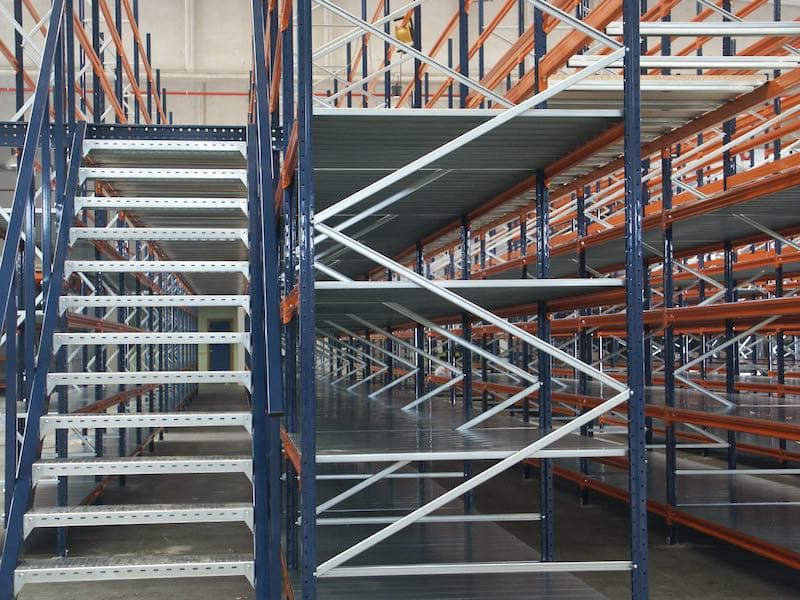
What is consistent across all project sizes is that the pre-installation stages - requirements gathering, survey, design, and sign-off - are just as important as the physical installation. Cutting corners at any of these stages almost invariably results in delays or rework later.
What Separates a Quality Installation from a Poor One
The racking installation market includes providers with widely varying levels of quality and experience. Understanding what distinguishes a professional installation will help you make the right choice.
 A company with SEMA membership is a clear indicator of professional standards. Providers who adhere to recognised UK safety standards operate to the industry’s recognised benchmark for safety and quality. Beyond accreditations, look for a provider with a clearly documented installation process, experienced, technically competent installation teams, and a proven track record of projects at a meaningful scale.
Experience with complex installations is particularly valuable. Fitting racking into a brand-new, empty warehouse is one thing. Managing a phased installation in a live operation - coordinating around staff, vehicles, and stock - requires a very different level of project management capability. Similarly, working in tight-access sites, shopping centres, or high-bay facilities demands technical experience that not all providers possess.
A turnkey approach - design, supply, and installation managed by the same team - typically delivers better results than working with separate providers for each stage. When installers work in tandem with designers, there are no last-minute adjustments to accommodate oversights, and accountability for the finished system rests clearly with one party.
Key Questions to Ask a Warehouse Racking Installation Provider
Before committing to a provider, it is worth asking the following:
- Do you carry out a full site survey before producing your design?
- Will you provide plans before installation begins?
- Can you provide references from completed projects of a similar scale and complexity?
- What accreditations and memberships do you hold? (Look for SEMA, Alcumus SafeContractor, SMAS Worksafe, and BSI/UKAS as indicators of quality)
- Do you carry full public liability and professional indemnity insurance?
- Can you also provide post-installation racking inspections and repairs?
Leading installers welcome the opportunity to discuss their processes in detail and provide clear evidence of their credentials and project history to ensure their clients have complete peace of mind.
What Drives the Cost of Installing Warehouse Racking?
Racking installation costs vary significantly between projects, and for good reason - every warehouse is different. Understanding the factors that drive cost helps you budget realistically and evaluate quotes fairly.
The system's scale and height are the most obvious factors. A straightforward installation of a modest number of bays at standard height is a very different proposition from a high-bay warehouse installation reaching 10 or 11 metres. Higher installations require more complex engineering, additional safety provisions such as anti-collapse mesh, and more exacting tolerances during installation.
The type of racking system specified also affects cost. Standard adjustable pallet racking is the most cost-effective option for many applications. Cantilever racking for long or irregularly shaped goods, drive-in racking for high-density storage, or live storage systems for FIFO operations all involve different levels of complexity and material cost.
Site conditions play a significant role. A new, empty warehouse with a good-quality concrete floor and straightforward access is the ideal scenario. An existing warehouse with a floor that requires preparation, where installation must be phased around live operations, or where access is restricted, will naturally cost more and take longer.
Finally, the scope of additional safety features - column protectors, guide rails, mesh partitioning, anti-collapse mesh, barriers - influences the overall cost but should never be viewed as optional. These components protect both your stock and your staff.
As a general principle: be wary of the lowest quote. Cutting costs on installation often means cutting corners on process, components, or safety provisions. The cost of remedial work - or worse, a serious incident - will almost always exceed the savings made at the outset.
Installation in Practice: Project Examples from USS
To illustrate what a full racking installation looks like in practice, here are two examples from recent USS projects.
High-Bay Warehouse Fit-Out: Insulation Distributor, Essex
When a long-standing insulation distributor moved into a brand-new, purpose-built warehouse in Rainham, Essex, they approached USS to complete the racking fit-out. The brief called for a comprehensive storage solution capable of supporting significant growth.
USS supplied and installed 218 frames of 11-metre high Kimer pallet racking, organised into 31 bays, along with over 2,000 beams of varying lengths and load capacities. The installation included over 1,000 timber and chipboard decks, pallet racking safety pins throughout, and 100 metres of 11-metre high anti-collapse mesh. A mesh partitioning system - 64 metres in total, with five push-to-release doors - was installed to create a designated walkway, separating pedestrian traffic from forklift operating areas in compliance with health and safety requirements. The project was completed on time.
The result was a well-organised, high-capacity warehouse equipped to support the client’s continued growth. Read the full story
Ongoing Storage Partnership: Speedy Hire, National Distribution Centre
USS has been a preferred supplier to Speedy Hire across multiple sites for several years, completing numerous racking installations and storage projects. At Speedy Hire’s Tamworth National Distribution Centre - a key hub for their UK-wide operations - USS has carried out a series of projects to improve storage capacity and operational workflow.
One recent project involved the supply and installation of 11 bays of Kimer pallet racking, 6 metres high, with four beam levels per bay and anti-collapse mesh to the rear. The racking was configured to create additional storage for power tools and generators, with the bottom beam level raised to accommodate the larger generator units. The project ran smoothly and resulted in increased storage capacity alongside a measurable improvement in workflow.
Speedy Hire’s Group Facility and Project Manager has described USS as delivering ‘A cost-effective service in respect of product, design, project management and installation,’ adding that USS has ‘helped us maximise space and increase our operational efficiency.’
Warehouse Racking Installation from United Storage Solutions
With over 45 years of experience, USS has completed racking installations across a wide range of sectors - from independent warehouses and distribution centres to national retail chains and major brands. Our team is experienced in complex, large-scale projects, and we maintain a network of trusted contractors for electrical, structural, and other specialist work.
USS is a SEMA member and holds a range of accreditations, including Alcumus SafeContractor, SMAS Worksafe, BSI/UKAS, and UKCA. Approximately 95% of our racking design clients ask us to handle installation, reflecting the added value of a fully coordinated, turnkey approach.
We also offer racking inspections following installation, carried out by inspectors who are either SEMA-Approved Racking Inspectors (SARI) or recognised by the HSE as technically competent. This means that from initial site survey through to ongoing annual compliance, we can serve as a single trusted partner for your warehouse racking needs.
Ready to Discuss Your Racking Installation?
Every project is different, and the best way to understand what your installation will involve - and what it will cost - is to have a conversation. Our team will ask the right questions, conduct a site survey, and prepare a detailed proposal tailored to your operation and budget.
Get in touch with the USS team today to arrange your initial consultation.
This blog is for information purposes only and should not be construed as legal or financial advice and not intended to be substituted as legal or financial advice.
Content Form

Follow Us


- Custom Fabrications
- Racking & Shelving
- Self-Storage Units