


- Mezzanine Floors
- Self-Storage Units
- Racking & Shelving
- Custom Fabrications
The 7 Warning Signs Your Warehouse Racking Is Costing You Money
read
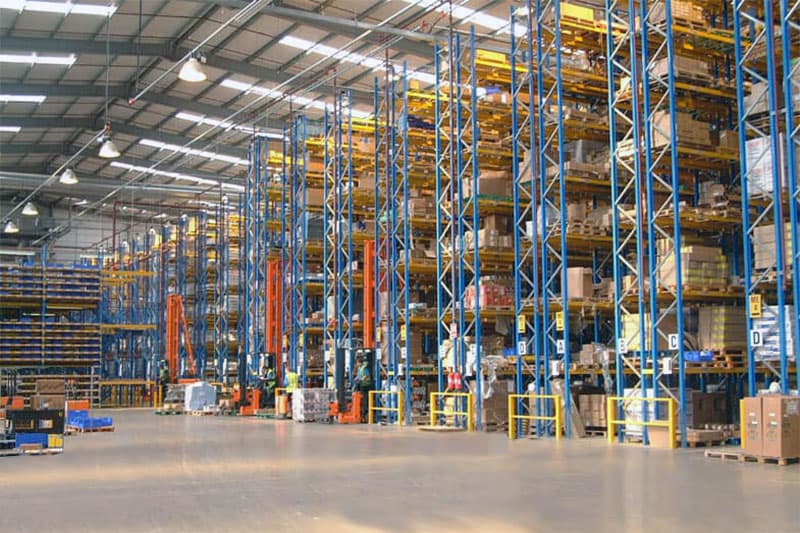
Most warehouse managers know when something has gone badly wrong. A racking collapse, an HSE visit, a near-miss that ends up in an incident report - these are impossible to ignore.
The costlier problems, however, are the ones you don't notice. The gradual inefficiencies. The accumulating damage. The layout that made sense five years ago but now quietly erodes productivity every single day. These don't announce themselves. They just show up, month after month, in your operating costs, your labour hours, and your bottom line.
With over 45 years of experience designing, supplying, and installing warehouse racking systems across the UK, the team at USS has seen every version of this story. Here are the seven warning signs that your racking is costing you more than it should - and what to do about each one.
Warning Sign #1: Racking Repairs Have Become Routine
Some level of wear and tear in a busy warehouse is normal. An upright takes an occasional knock, a beam connector gets checked, a column protector is replaced. These are the expected costs of running a high-throughput operation.
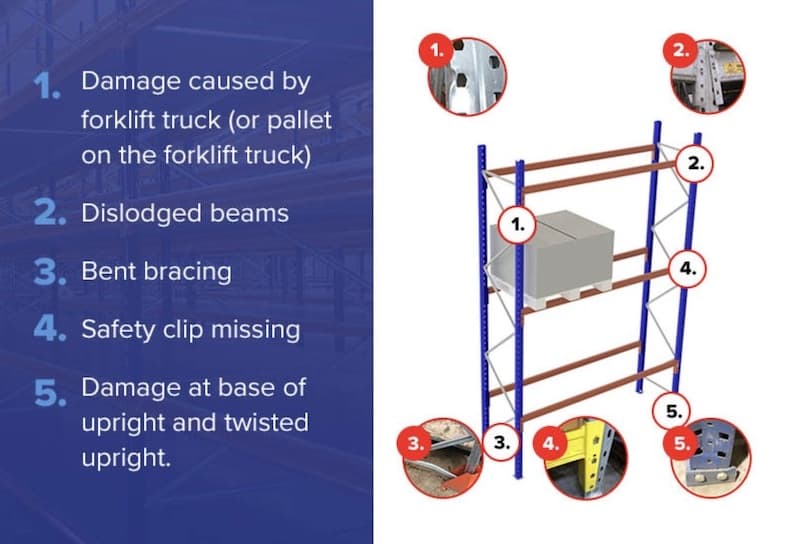
But if you find yourself calling out for racking repairs every few weeks, or if a significant chunk of your maintenance budget routinely goes on replacement uprights and damaged components, something more fundamental is wrong. Chronic repair costs are a symptom, not a problem in themselves. The underlying causes are usually one of three things: forklift traffic routes that bring vehicles too close to racking legs; inadequate column protection; or a racking layout that simply was not designed for the volume and type of activity now passing through it.
What to do:
In the short term, review forklift traffic patterns and ensure column guards are fitted to all at-risk uprights. Longer term, consider whether the racking layout still suits your operation or whether a redesign would reduce impact frequency and the costs that come with it. A professional racking audit will quickly identify whether you are treating symptoms or solving the actual problem.
Warning Sign #2: Pickers Are Walking Further Than They Should
Labour is typically the highest cost in a warehouse operation. If your racking layout is forcing operatives to travel longer distances to pick fast-moving items, you are paying for that inefficiency with every single pick - multiplied across hundreds or thousands of picks per day.
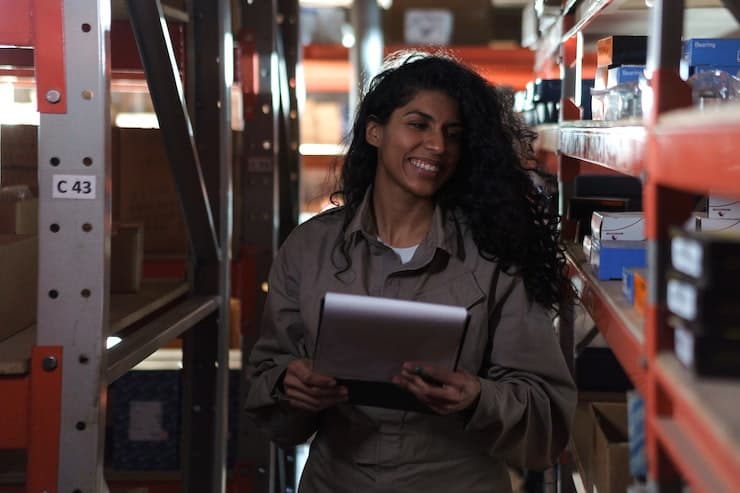
This problem is especially common in warehouses that have grown organically, adding new racking bays and storage areas over time without stepping back to review the overall flow. Once slow-moving products may now be your bestsellers. Seasonal items that were given prime locations may no longer justify them. The racking itself may be perfectly sound, but the way it is configured is quietly costing you time and money.
What to do:
Run an ABC analysis of your inventory - categorising products by pick frequency - and compare the results against your current storage locations. Fast-moving items should be as close to despatch as possible, at the most accessible height levels. This analysis alone, applied to your racking layout, can deliver measurable reductions in pick time without any capital investment. If the gains justify it, a racking redesign based on your actual product velocity will go even further.
Warning Sign #3: You Are Under 85% Capacity or Aisles Are Overcrowded
Both ends of the utilisation spectrum are expensive in different ways.
If your racking is consistently below 85% capacity, you are paying for storage space - through rent, rates, heating, and insurance - that is not earning its keep. The racking may be the wrong type, at the wrong height, or simply have more than your current inventory requires. Every empty bay represents wasted overhead.
At the other extreme, perpetually congested aisles create a different set of problems. Forklifts manoeuvring in tight spaces cause more racking damage. Operatives slow down to navigate safely. And if your aisles are so packed that you are storing pallets in non-designated areas or blocking emergency exits, you have a compliance problem as well as an efficiency one.
What to do:
The right answer depends on whether your space is too large for your inventory or whether your inventory has outgrown your space. Either way, a proper capacity audit - looking at actual utilisation by bay and height level, not just overall square footage - will tell you where the problem really lies. If you are under-utilising the cube of your building, taller racking, a mezzanine floor, or a reconfigured layout may allow you to consolidate into less space or accommodate significant growth without moving premises.
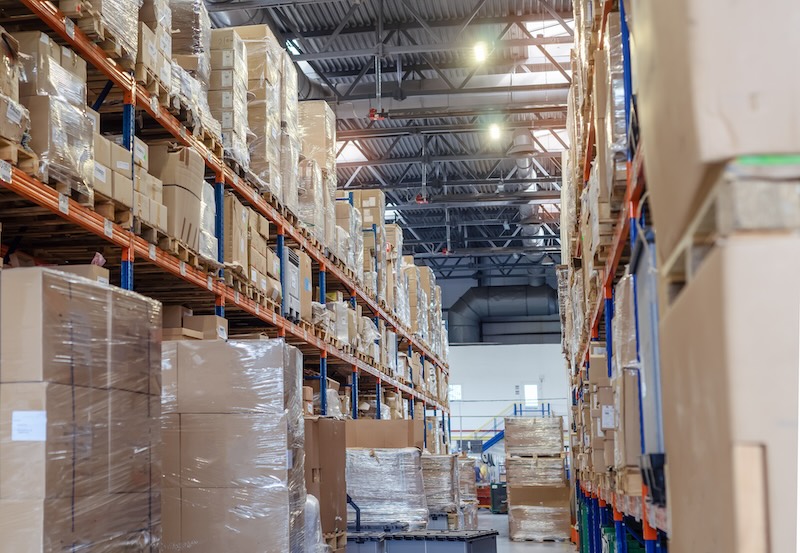
Warning Sign #4: Safety Incidents and Near-Misses Are Trending Upward
An upward trend in incidents - or near-misses that are flagged but not formally recorded - is one of the most serious warning signs on this list, because the consequences of getting it wrong go well beyond financial cost.
Racking-related incidents attract HSE scrutiny, and HSE investigations into warehouse incidents look specifically at whether racking was properly maintained, inspected, and fit for purpose. Employers have been prosecuted and fined for failing to maintain safe racking systems even where no serious injury occurred. Where injuries do happen, the legal and insurance consequences can be severe.
Beyond the regulatory exposure, there is a straightforward operational reality: every incident, however minor, disrupts your operation. And a racking system that is generating a pattern of near-misses is telling you something important about its condition.
What to do:
Do not wait for the annual inspection cycle. If safety incidents are increasing, commission a competent racking inspection now. Any sections flagged as RED risk must be taken out of service immediately. Review your reporting culture - operatives should feel confident flagging damage without fear of blame, because unreported damage is far more dangerous than reported damage.
Warning Sign #5: Your Racking Inspection Reports Are Getting Worse
A racking inspection report with a handful of GREEN risk items and one or two AMBER points to address is perfectly normal for a well-maintained system. If your most recent report contains multiple RED risk items, a growing list of AMBER findings, or the inspector has noted the same issues over consecutive years - that is a different story.
Inspection findings that repeat year after year are a sign that problems are being patched rather than properly resolved. Genuine repairs - using manufacturer-approved methods such as splice kits - should bring an upright back to GREEN condition. An upright that has only been incorrectly patched enough to drop below the RED threshold, without being properly repaired, will likely become a RED risk again within a few weeks. That kind of half-measure ends up more expensive to maintain than repairing it properly to GREEN condition or replacing it in the first place.
What to do:
Address all RED and AMBER findings promptly and systematically - and keep the documentation to demonstrate you have done so. Then compare the cumulative cost of the last two to three years of racking repairs against the cost of a replacement system. For older racking installations that are consistently generating high inspection findings, replacement often offers better value than ongoing maintenance. USS can carry out a full racking assessment and provide honest, comparative costings.
Warning Sign #6: Your Racking Is Blocking the Next Step in Your Operation
Warehouse automation - whether that means voice-directed picking, conveyor integration, automated storage and retrieval systems, or simply optimised WMS routing - is increasingly within reach for operations of all sizes. But legacy racking installed without consideration for automation can make it very difficult or very expensive to take the next step.
This is not just about high-tech robotics. Something as straightforward as wanting to introduce a guided picking route, reconfigure your despatch area, or add a mezzanine level can be blocked by a racking installation that leaves insufficient flexibility.
If your racking is a constraint on where your operation can go - rather than an enabler of it - that constraint has a cost, even if it is difficult to quantify precisely.
What to do:
When commissioning any new racking installation or significant reconfiguration, build in a conversation about your three- to five-year operational plans. A well-designed system should not just serve today's needs - it should accommodate foreseeable growth and change. USS's racking design process includes a detailed brief stage specifically to understand future requirements alongside current ones.
Warning Sign #7: Operating Costs Are Rising, But Throughput Isn't
This is the most difficult warning sign to pin on any single cause - because it is often the cumulative effect of several of the issues above, compounding quietly over time.
If your cost per pallet picked, cost per order dispatched, or cost per square metre of storage is creeping upward, but your throughput stays flat or grows only modestly, your racking and storage layout is a strong candidate for investigation. Labour costs tied to poor layout. Maintenance costs from an ageing or ill-suited system. The overhead of wasted space. The hidden cost of slower operations. Together, these can add up to a very significant drag on profitability without ever appearing as a single, obvious line item.
What to do:
Calculate your cost per pallet or cost per pick and track it over time. If the trend is upward, work back through the contributing factors. A structured operational review - looking at your racking layout, storage utilisation, pick routes, and maintenance spend together - will quickly identify where the greatest gains are available. This is exactly the kind of analysis USS carries out as part of a warehouse design consultation.
How Many Warning Signs Apply to Your Warehouse?
How many of these statements apply to your operation? Count them up, then check your score below.
- Racking repairs and call-outs have become a regular occurrence rather than an occasional one
- Pickers are consistently travelling further than they should to reach fast-moving stock
- Your racking is running below 85% capacity, or your aisles are regularly congested
- Safety incidents or near-misses in the racking area have increased over the past 12 months
- Your last inspection report contained more RED or AMBER findings than previous years, or the same issues keep recurring
- Your current racking layout is making it difficult or expensive to automate, expand, or reconfigure your operation
- Your operating costs are creeping up, but throughput is staying flat
Your Score
You answered Yes on 1-2 items above:
Some inefficiency is present. Address the specific areas flagged and monitor - a minor adjustment may be all that is needed.
You answered Yes on 3-4 items above:
You have a pattern, not a coincidence. Your racking system is likely costing you more than it should. A professional racking audit is overdue.
You answered Yes on 5 or more items above:
Your racking is probably generating high and ongoing cost across multiple areas of your operation. The case for a full review - and potentially a replacement or reconfiguration - is strong. Talk to USS.
The Forth Bridge Problem: Small Fixes Can Become an Expensive Trap
There is a well-known analogy in engineering: the Forth Bridge. For much of its history, the bridge required continuous repainting - as soon as the painters finished one end, it was time to start again at the other. The work never stopped, and neither did the cost.
Some warehouse racking installations work the same way. Individual repairs feel reasonable in isolation - replacing a damaged upright here, patching a beam there, fitting another column guard somewhere else. But if the underlying issue is a system that was never quite right for the operation, or that has been pushed beyond its design life, these repairs will keep coming. The cumulative cost over three or five years may well exceed the cost of a properly specified replacement system that would have eliminated the problem at the root.
The question worth asking is not "can we keep this going for another year?" but rather "what is the most cost-effective storage solution for the next five to ten years?" Answering that question properly - with accurate data on your current costs, your operational requirements, and the realistic options available - is what a professional racking design consultation is for.
Talk to USS About Your Warehouse Racking
If you have recognised one or more of these warning signs in your own operation, the most useful next step is a conversation with someone who understands warehouse racking - not to sell you something, but to help you understand what is really driving the problem.
USS has been designing, supplying, and installing warehouse storage systems across the UK for over 45 years. We are SEMA members and SMAS Worksafe-accredited. Our inspections are carried out by SEMA-Approved Racking Inspectors or other technically competent persons recognised by the HSE. We carry out racking inspections, design new installations from scratch, reconfigure and upgrade existing systems, and provide repair and maintenance services.
Every project starts with a site visit and a conversation about your operation. There is no obligation, and never a one-size-fits-all solution. Get in touch with the USS team today to arrange yours.
This blog is for information purposes only and should not be construed as legal or financial advice and not intended to be substituted as legal or financial advice.

Follow Us


- Custom Fabrications
- Racking & Shelving
- Self-Storage Units


