


- Mezzanine Floors
- Self-Storage Units
- Racking & Shelving
- Custom Fabrications
Should You Upgrade, Improve or Replace Your Racking System?
read
In this article, we’ll look at the question of what to do about warehouse racking that’s no longer fit for purpose. We’ll discuss the various options available when it becomes clear that the status quo is no longer acceptable, and how to decide between repairing or upgrading existing racking - or replacing it altogether.
Previously, we’ve looked at the question of pallet racking in the round, highlighting the flexibility built into racking solutions when modular options are deployed, and also explaining how best to plan racking systems for maximum efficiency. While these articles tended to assume the starting point of a blank canvas in the form of an empty warehouse, we’ve also examined just how expensive it is to move to a new space altogether when an existing space no longer ticks all the relevant boxes.
Here, we discuss the range of possibilities open to you when racking systems, already in place and firmly established, are no longer delivering what your business needs, or have simply reached the end of their useful life
Questions of Safety
There are two clear ways in which less-than-optimal racking is likely to manifest itself, and the first of these is in the physical condition of the various component parts.
Guidance published by the Health and Safety Executive (HSE) states that, alongside a raft of other safety measures, racking should be inspected at least once every 12 months by SEMA (Storage Equipment Manufacturers’ Association) approved inspectors, while further legislation around the safety of racking systems falls under The Provision and Use of Work Equipment Regulations 1998 (often abbreviated to PUWER) and general guidance on health and safety in any workplace.
When Repairs are More Than Routine
Regular inspections and maintenance clearly form part of any safe warehousing operation, but there will come a point in the life cycle of any racking solution when you’re able to notice an uptick in the number of ‘routine’ repairs that have to be carried out. Once faults and failures mount up to the point at which they become an ongoing issue, then it is clearly time to start thinking about upgrading or replacing your racking.
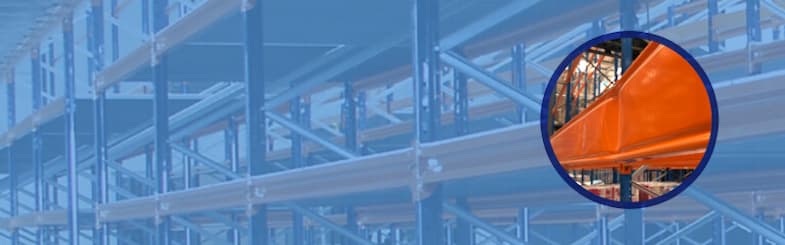
There are obvious visual signs too. For example, if racking beams - which are designed with a degree of inbuilt flexibility and can deflect under a heavy load - stay deflected after the load is removed, it’s a clear and fairly easily spotted sign that it’s no longer up to the task. Another clear visual indicator is the presence of corrosion, which presents as tarnished metalwork, flaking paint, and rust patches.
The Business Impact of Sub-Optimal Racking
Clearly, the presence of bent or corroded beams is a fairly stark indication that action needs to be taken. In any well-run warehouse operation, it is hoped that issues with ageing or over-stocked racking would come to light before these potentially dangerous issues arise. It is, however, possible to keep a careful lookout for other, less dramatic operational indications that warehouse racking is no longer fit for use.
In simple terms, this could very easily happen to any business which has experienced a growth in demand, particularly if that growth has occurred over a relatively short period of time, or which has shifted focus from one type of product to another, with a concurrent shift in the amount and type of racking that would ideally be suited to demand. Signs that it may be time to rethink your existing racking provision, above and beyond clear-cut safety issues, could include the following:
- An increase in the number of incidents when items are delivered to customers in less than optimum condition
- An increase in the number of lost or non-delivered items, and a general rise in issues around ease of traceability.
- A breakdown in the definition between different zones of operation within a warehouse space. If incoming and outgoing items of stock are starting to appear in the same racking sections, then it is a clear sign that the racking isn’t meeting the demands being placed on it.
- Misplaced items. If items are starting to spill off the racking and occupy space along the aisles between them, it’s clear that more capacity is required, not to mention presenting safety issues for anyone working in the warehouse.
- Lack of working space. Although storage is at the heart of any warehouse operation, the racking must be installed in a way that leaves sufficient space for employees to work safely and comfortably.
It’s worth noting that, in our experience, many racking solutions evolve in a piecemeal and reactive manner, which almost invariably means that the space allocated for tasks such as packing and administration is compromised.
Signs That a Change is Needed
All of the above are clear signs that the racking provision in a warehouse needs a rethink, but they are also indications that the right moment for that rethink was actually some time ago. By the time the clear visual and practical impacts of sub-optimal racking become apparent, there’s a high likelihood that the situation has already begun to have an adverse effect on the business.

Bearing that in mind, there are two clear metrics which, while a range of issues could explain them, should be regarded as a good reason to reassess the racking in your warehouse. These are:
- A drop in levels of customer satisfaction
- An increase in overall operational costs
If these shifts occur, then further investigation needs to take place against a range of KPIs. Individual businesses will have their own KPIs, but chief among these will be:
- Any increase in the cost per pallet across the warehouse
- A shift in the speed of turnover of inventory in the warehouse
- Lead times are becoming longer
- An uptick in the number of returns that the warehouse has to deal with
- Increase in safety incidents reported
Indicators of this kind, if identified early enough, could be used as a prompt for rethinking your warehouse racking, something that, in and of itself, underlines the importance of collecting and analysing the widest possible range of operational data.
Types of Change
A more overarching approach to the interpretation of KPIs would be to take them as the starting point for future-proofing your warehouse racking.
An upgrade with flexibility built in increases your operational capacity to adapt to change with speed.
Any such upgrade in your racking should only take place after a deep analysis of the KPI’s in question, through the lens of an audit of your warehouse operations. This will make it easier to identify any aspects of racking that require upgrade or improvement. The nature of any upgrade could include the following:
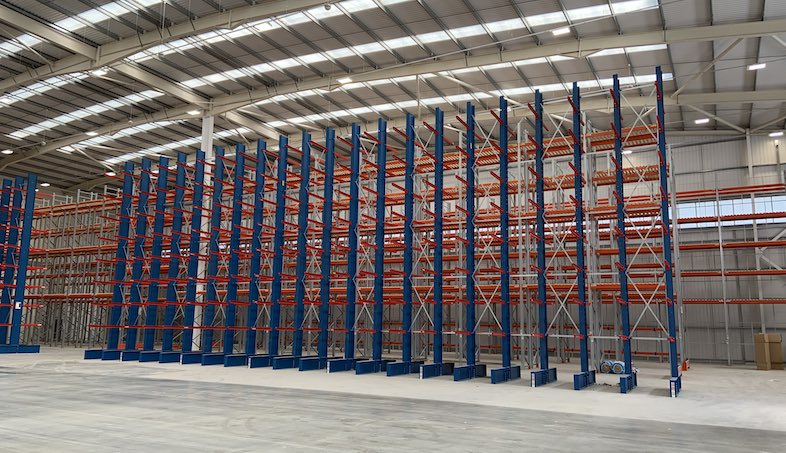
- Expansion - If the problems relating to your warehouse racking can be attributed to a lack of space (perhaps reflected more explicitly in issues such as clutter in the aisles), then the simplest solution might be to expand the racking provision. If floor space is an issue, the expansion could involve adding to the existing racking by making it taller and utilising any available height capacity. If the height capacity is limited then a reconfiguration of the racking layout could involve the creation of narrower aisles and a more limited increase in height.
- Go high. In the past, we’ve highlighted the use of mezzanine flooring to utilise spare height within a space, and it could be that this is the solution to expanding the racking available in your warehouse. Once a mezzanine floor is installed, the simplest solution might be to shift operations, such as administration, up to the mezzanine and utilise the freed-up space to install additional racking.
- If the height isn’t available, then an alternative means of expanding racking could involve shifting from a standard wide aisle set-up to the use of double deep racking placed back to back, a solution that cantilever racking makes possible.
- Relocate Stock - An analysis of your warehouse operations might reveal that the issues you’re having relate to the location of items. If there has been a sudden uptick in demand for a particular item, for example, but that item is stored in a remote corner of the warehouse far from the picking, packing, and dispatch stations, then it is almost sure to have a negative impact on the speed and efficiency of operations.
The same problems could arise if particular items - such as a specific electrical device and its frequently used accessories - are frequently purchased together but stored far apart. A shift in the racking layout of a warehouse doesn’t necessarily involve new racking, but it could be the perfect opportunity to upgrade the racking in a way that makes it easier to roll out a whole new programme of improvements, such as warehouse automation, for example. The logic behind this is that reworking the layout of your racking is bound to cause a degree of disruption, so you might as well ride that disruption out in a way that maximises the benefit.
Retrofitting
The possible solutions outlined above would fall under the general heading of ‘retrofitting’, which, in simple terms, means incorporating technologies and systems into existing racking. The advantages of a retrofit - as opposed to replacing the racking altogether - include:
- Lower Costs - Upgrading existing racking calls for much less in terms of up-front investment and is likely to reduce costs in the future as new components will require less maintenance.
- Higher Efficiency - An upgrade that makes it easier to apply technologies such as warehouse automation will boost efficiency and productivity by making it easier to track inventory, reducing errors and lost items and increasing productivity.
- Greater Sustainability - Working with existing racking and augmenting what is already in place, rather than starting all over again, is a more environmentally friendly solution to the problem of sub-optimal racking.
- Business Agility - Upgrading existing systems through retrofitting makes it possible to respond to a changing business environment with as little disruption as possible, particularly when compared to replacing the racking altogether.
Conclusion
In simple terms, the question of whether to improve and upgrade your racking systems or replace them altogether can be broken down into three stages. As explained above, carrying out repairs and maintenance on your racking is a crucial part of ensuring the safety of your operations and employees. While any warehouse operation is, by definition, bound to involve ongoing repairs, there are occasions when it becomes clear that more action needs to be taken.
Such situations involve cases where the damage to the racking is clearly dangerous or those where more ‘minor’ repairs are being undertaken more frequently. To some extent, this raises the question of whether it would be quicker and less disruptive to replace the most severely damaged area of racking and leave the rest in place, adhering to the standard inspection, maintenance, and repair protocols. However, you will need to ensure that the rest of the racking, subject to the same wear and tear as the section being replaced, won’t need replacing sooner rather than later, particularly if the racking is all of the same vintage. In other words, replacing just the most badly damaged section of racking could lead to a ‘Forth Bridge’ scenario in which replacing damaged and worn racking - much like the painting of that famous construction - is a never-ending task, constantly demanding your time and investment. If a condition analysis of your racking across the board indicates that this could well be the case, then it could be time to bite the bullet and opt for a full replacement with a racking system fit for the challenges of the 21st century.

Have a Strategy!
In other circumstances, the case for making changes to your racking will be driven by strategy rather than necessity - a response to business imperatives such as declining customer satisfaction rather than urgent safety concerns. If this is the situation, then simply improving or upgrading parts of your racking could be regarded as tinkering at the edges, whereas a full replacement could drive a more comprehensive rethink of your operations. In this case, while initially more disruptive, it will ultimately lead to all the racking systems in your warehouse delivering the same high standards of efficiency and usefulness.
If the scale of disruption caused by a full replacement is more than your business can withstand, then a compromise might involve implementing a rolling programme of replacements, taking a period of approximately 12-24 months, at the end of which your racking will be fully fit for purpose.
Whether you upgrade, improve, or replace in total, the addition of a modern racking system will ensure that your warehouse is as well-equipped as possible to meet the challenges and opportunities likely to be faced by the warehousing sector in the years to come.
This blog is for information purposes only and should not be construed as legal or financial advice and not intended to be substituted as legal or financial advice.

Follow Us


- Custom Fabrications
- Racking & Shelving
- Self-Storage Units


