


- Mezzanine Floors
- Self-Storage Units
- Racking & Shelving
- Custom Fabrications
Is Self-Storage a Good Business to Invest in? The Trends Are Interesting.
read

The old expression "May you live in interesting times" – often misattributed as a Chinese curse – has rarely felt more apt. From Brexit and Trump's first presidency through COVID-19, the war in Ukraine, and now the apparent recalibration of the post-WWII world order, the past decade has delivered economic turbulence in waves.
But if you've invested in self-storage, "interesting times" may not feel quite so cursed. Self-storage remains one of the few genuinely recession-resistant industries, thriving precisely when economic uncertainty drives people toward flexible storage solutions. As the UK faces what seems like a permanent cost-of-living crisis, this article examines the current state of the self-storage sector and whether continued uncertainty makes it a stronger or weaker investment opportunity.
Rising Costs, Smarter Operations
Research published by Savills in September 2025 highlighted continued resilience across the European self-storage sector. While UK growth lagged slightly behind continental Europe due to sluggish economic performance, the UK maintained its position as Europe's self-storage capital.
More significantly for potential investors, Savills identified how UK operators are responding to increased operating costs, including a 6.6% rise in business rates, higher employer National Insurance contributions, and the National Living Wage increase from £11.44 to £12.21 per hour for workers over 21.
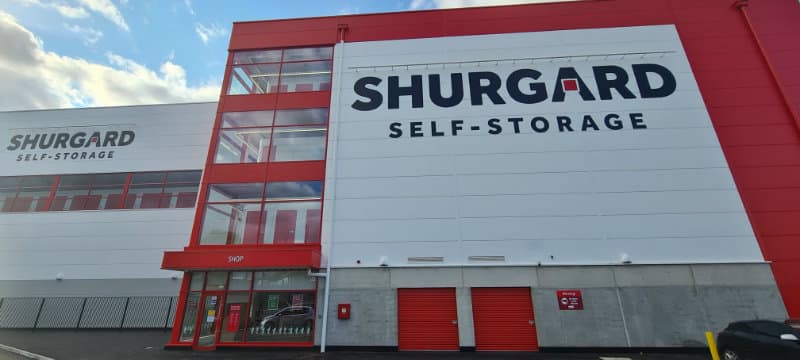
Rather than discouraging investment, these pressures are driving innovation. Savills found increasing reliance on automation, lean staffing models, and AI-powered systems to streamline operations and reduce costs. The study also noted growth in third-party management of self-storage facilities, predicted to improve scalability, professionalism and investor choice across the industry.
Perhaps most tellingly, lenders remain supportive of self-storage investment, attracted by "resilient cash flows and diversified demand."
The Technology Revolution
Beyond broad economic trends, individual examples illustrate the sector's direction of travel. In January 2025, Fortune magazine profiled Cubby, a self-storage software company founded in 2022 to modernise the legacy systems most facilities still use. Just three years later, Cubby serves more than 400 self-storage operators across 2,000+ facilities and recently raised $63 million in new investment.
These figures speak to both the strength of the self-storage sector and the additional investment opportunities emerging from the ongoing shift toward streamlined technical solutions in what Fortune called a "classic invisible but ubiquitous" industry.
The investment appeal extends to Real Estate Investment Trusts (REITs). Sure Dividend lists SmartStop Self Storage REIT (SMA) among the top 10 REITs for returns, offering investors a 4.9% monthly yield without the administration burden of traditional landlording.

The US Blueprint
Both examples come from the US market – the birthplace of modern self-storage and still the world's largest. Fortune's article revealed the US self-storage industry is worth approximately $50 billion, with more than 52,000 locations. That's more than the combined US locations of Burger King, Chick-fil-A, Starbucks and McDonald's. This scale of demand helps US self-storage businesses deliver profit margins of 30-40%.
While the UK market differs in size and maturity, the fundamental principles remain consistent: demand driven by multiple factors (making it more resilient during economic uncertainty) and unusually strong investment resilience. These characteristics apply equally across the UK and continental Europe.
UK Market Performance
For comprehensive UK self-storage data, the UK Self Storage Association's annual report remains the definitive source. The 18th edition, published in 2025, revealed:
- Revenue per square foot up 6% to £29.13
- Industry turnover reached £1.2 billion
- Staff per store reduced to 2.6
- 90% of stores offering online booking
- Occupancy rate 75.1% (down 1%)
- 68% of businesses actively using AI
- 15% of sites now unmanned
The convergence around online booking, AI adoption, reduced staffing levels and unmanned sites points to technology's increasing role in "future-proofing" self-storage investments. The report predicts the next few years will see new self-storage formats emerge, including external drive-up or drop-down solutions, particularly within larger operations or management systems, further increasing investment attractiveness.
The sector's health is underlined by a striking statistic: total UK self-storage floor space tripled to more than 60 million square feet between 2005 and 2023. This growth occurred against a backdrop of profound economic uncertainty, including the 2008 financial crash, the Brexit vote and its aftermath, the COVID pandemic, and ongoing tariff and trading uncertainty since Trump's 2024 re-election.
Through all of this, self-storage continued to grow and thrive. While past performance never guarantees future results, it paints a picture of a sector that can weather the widest possible range of market conditions and emerge positioned for continued growth.
Why Self-Storage Remains Resilient
Understanding why people use self-storage reveals the sector's structural resilience. According to the SSA survey, customers cited:
- Creating more space at home (excluding working from home) – 29%
- Storing belongings during redecoration – 24%
- Between properties while moving – 17%
- Business reasons – 16%
- Lack of space in new home – 16%
- Making space to work from home – 13%
- Storing belongings during university holidays – 13%
- Creating more space at work – 12%
- Life events (birth, marriage, death, divorce) – 11%
Business-related storage has doubled in the past decade, while creating workspace and storing belongings during redecoration have both increased significantly. Individually, these reflect different socio-economic and workplace trends. Collectively, they demonstrate how self-storage maintains demand across the widest possible range of circumstances.
The demand spans moving home or staying put and modernising, marriage or divorce, birth or death, university or workplace. This multiplicity of demand drivers – many likely to persist or even intensify during difficult economic periods – is perhaps the key reason self-storage remains a low-risk investment option.
The Investment Outlook - An Interesting Inflection Point
In 2026, self-storage stands at an interesting inflection point. Rising operating costs are driving technological innovation and operational efficiency. Automation and AI are becoming standard rather than experimental. Third-party management is professionalising the sector and creating new investment models. Meanwhile, the fundamental drivers of demand remain as diverse and robust as ever.
For investors evaluating opportunities during ongoing economic uncertainty, self-storage offers something increasingly rare: a sector with proven resilience through multiple crisis periods, strong current performance, clear technological evolution, and structural demand characteristics that actually benefit from the kind of turbulence that damages most industries.
The question isn't whether self-storage is a good investment in 2026. The evidence suggests it remains one of the more reliable options available. The real question is how investors can best position themselves to capitalise on the sector's continued evolution.
Planning a self-storage investment project?
At United Storage Systems, we've been designing and fitting out self-storage facilities across the UK for decades. Whether you're planning a purpose-built facility, converting an existing building, or expanding current operations, our team can guide you through every stage – from initial site assessment and design through to complete fit-out using our Uniscreen2000 construction system.
We understand the importance of maximising lettable space while minimising ongoing operational costs, particularly in today's environment where automation and efficiency are increasingly critical to profitability.
Get in touch to discuss your self-storage project – no matter what stage you're at, we'd be happy to provide guidance and a no-obligation consultation.
Fill in our contact form with your details and we'll get right back to you.
This blog is for information purposes only and should not be construed as legal or financial advice and not intended to be substituted as legal or financial advice.

Follow Us


- Custom Fabrications
- Racking & Shelving
- Self-Storage Units


